Do You want daily job updates ?

Do You want daily job updates ?
Click here and enter your mail id.
Showing posts with label Biotech News. Show all posts

Wednesday, 26 October 2016

"Artemisinin treats malaria faster than any other drug. It can clear the pathogen from the bloodstream within 48 hours," says senior author Shashi Kumar, of the International Centre for Genetic Engineering and Biotechnology in New Delhi, India. "Our research is focused on finding a way to make this drug available to more people."
Malaria infects more than 200 million people every year, according to the World Health Organization, and kills more than 400,000, mostly in Africa and Southeast Asia. The majority of those who live in malaria-stricken areas cannot afford to buy artemisinin. The drug's high cost is due to the extraction process and largely to the fact that it's difficult to grow Artemisia annua (sweet wormword), the plant that is the original source of the drug, in climates where malaria is common, such as in India. Advances in synthetic biology have made it possible to produce the drug in yeast, but the manufacturing process is difficult to scale up.

Earlier studies looked at growing the compound in tobacco -- a plant that's relatively easy to genetically manipulate and that grows well in areas where malaria is endemic. But yields of artemisinin from those plants were low.
Image result for Tobacco plants engineered to manufacture high yields of malaria drug "A"

source:https://www.sciencedaily.com/releases/2016/10/161020142815.htm

Friday, 21 October 2016

If aliens were to examine a human, they would think we were just slavish organisms designed to feed microbes and carry them around. Our bodies contain ten times more bacteria than cells, and there are an estimated 3.3 million genes in the total bacteria DNA, which is 160 times the number of human genes. Our intestine hosts about one kilogram of bacteria which help to digest and metabolise food, produce vitamins and protect us from infections.
Image result for Do microbes control our mood?


The above is textbook knowledge, but loads of recent studies are uncovering new and unsuspected roles for these little companions. There is evidence that gut bacteria can protect or predispose us to pathologies ranging from inflammation to diabetes and obesity. And, as far-fetching as it sounds, a remarkable amount data shows that they can even modify our mood and behaviour.
Microbes are hot on the scientific agenda. In May, the US government launched a National Microbiome Initiative with an overall budget of half a billion dollars, while the EU is funding more than 300 projects related to the microbiome.
Yolanda Sanz, a researcher at the Institute of Agrochemistry and Food Technology (IATA) of the Spanish National Research Council in Valencia, Spain, coordinates MyNewGut, the largest EU consortium in the field with 30 partners in 15 Countries. We asked Sanz about the perspectives of research and the intriguing connections between the microbiome and the brain.

source:https://www.sciencedaily.com/releases/2016/10/161020114611.htm
  Novartis will partner with Cerulean Pharma to develop nanoparticle-drug conjugates (NDCs) that combine Cerulean’s proprietary Dynamic Tumor Targeting™ technology with Novartis’ proprietary compounds, to be directed at up to five undisclosed cancer targets.
Cerulean said today it will generate $5 million upfront through the companies’ collaboration, plus funding for five full-time equivalent employees. Cerulean may potentially make millions more in payments tied to achieving preclinical, clinical, regulatory, and sales milestones for each target. Following regulatory approvals, Cerulean could also earn single-digit to low double-digit tiered royalties on net sales for each NDC product.
Under the collaboration, Cerulean will create NDC candidates using its Dynamic Tumor Targeting platform, with Novartis agreeing to oversee further development and commercialization of those products.

Image result for biotech news
“This collaboration is further validation of our powerful technology platform, and we are excited that Novartis is including NDCs in its drug discovery and development efforts,” Cerulean president and CEO Christopher D.T. Guiffre said in a statement.
Separately, Cerulean said that a longtime shareholder, the institutional investor Aspire Capital Fund, has agreed to purchase $20 million of the company’s common stock— 800,000 shares at $1.25 per share. Cerulean also has the right to sell up to the remaining $19 million of its common stock to Aspire over 24 months, at prices based on a formula linked to current market prices at the time of each sale.

“This agreement with Aspire provides us access to capital to support our ongoing clinical efforts,” Giuffre noted. “We can use this facility to opportunistically strengthen our balance sheet without unnecessary dilution as we advance our CRLX101 and CRLX301 programs.”

source:http://www.genengnews.com/gen-news-highlights/novartis-to-develop-cerulean-nanoparticle-drug-conjugates-in-cancer-collaboration/81253338

Wednesday, 19 October 2016

A team of researchers from Centre for Plant Biotechnology and Genomics (CBGP, UPM-INIA), has published the results on "Alt a 1" in an article released in Scientific Reports from the Nature group. "Alt a 1" is a strongly allergenic protein found in certain endophytic fungi species that causes severe asthma.
This study provides better understanding of the role played by this protein in the pathogenicity of the fungus. Besides, the mechanism identified in plants can also provide information of clinical interest about respiratory diseases and allergies caused by these fungal.
Spores of certain Alternaria fungus that appear as mold in plants of most of our crops are present in the atmosphere throughout the year. Alt a 1 is a strongly allergenic protein present in the spores of Alternaria alternata before germination. "Alt a 1" is responsible for infections and common respiratory conditions and is also considered as the major allergen associated with chronic asthma.

The pathogenic action of this protein is linked to the production of certain toxic compounds and the increasing production of reactive oxygen species by plants which are toxic agents that cause the cell death. "Alt a 1" interacts with defense proteins that plants express when are attacked by inhibiting their activity. The Alternaria spores remain on the surface of the plant without inducing symptoms while waiting for the right moment to germinate. When this occurs, the spores provoke a cascade of processes that had been remained largely unexplored until now.
Image result for biotech news
source:https://www.sciencedaily.com/releases/2016/10/161014101806.htm

Monday, 17 October 2016

A home appliance that grows the ingredients for a healthy meal within a week from plant cells is no longer science fiction. VTT Technical Research Centre of Finland Ltd's first 3D-printed CellPod prototype is already producing harvests.
Image result for New kind of local food grows in your own kitchen

VTT and its plant biotechnology research scientists have the vision of developing a home appliance for the markets that makes it possible to grow, say, healthy Finnish berries in a new way. Growing plant cells in a bioreactor is not a new idea as such, but only the latest technologies have enabled the development of a plant cell incubator for home use that yields a harvest within a week.
VTT's first CellPod prototype is currently producing a harvest in Otaniemi. The appliance resembles a design lamp and is ideal for keeping on a kitchen table. Researchers are in the process of developing different product ideas in collaboration with consumers, with the aim of commercialising the concept.
"Urbanisation and the environmental burden caused by agriculture are creating the need to develop new ways of producing food -- CellPod is one of them. It may soon offer consumers a new and exciting way of producing local food in their own homes," says Lauri Reuter, VTT research scientist.

source:https://www.sciencedaily.com/releases/2016/10/161013095306.htm
Medical biotechnology is the use of living cells and cell materials to research and produce pharmaceutical and diagnostic products that help treat and prevent human diseases. Most medical biotechnologists work in academic or industrial settings. In academic laboratories, these professionals conduct experiments as part of medical research studies; industrial biotechnologists work toward developing drugs or vaccines. The medical biotechnology field has helped bring to market microbial pesticides, insect-resistant crops, and environmental clean-up techniques.

Image result for medical biotech
Examples of discoveries in the field of medical biotechnology include insulin and growth hormone. Both discoveries were the result of research studies related to deoxyribonucleic acid (DNA). Many scientists in the medical biotechnology field study genetic engineering. This involves isolating, identifying, and sequencing the human genes to determine their functions. Work in this arena may possibly lead to cures for certain diseases, such as Parkinson’s and Alzheimer’s syndrome.
Academic biotechnologists work in universities, hospitals, government labs, or nonprofit organizations. Some may conduct research on studies they began in graduate school. Others may initiate new areas of medical biotechnological research.
Industrial biotechnologists typically work for private businesses that are conducting applied research, which is directed toward solving a particular medical issue. Their findings often lead to new pharmaceutical drugs and medical treatments. Work in the industrial field tends to be geared more toward the financial goals of the business that employs these scientists. Industrial biotechnologists may be required to explain or defend their work to non-scientists who have decision-making powers in the business.

source:http://www.wisegeek.com/what-is-medical-biotechnology.htm

Friday, 14 October 2016

It's a known fact that cells can move around the body, but how they do it has been unknown -- until now.

Image result for biotech news

Researcher in Infection Medicine Pontus Nordenfelt at Lund University in Sweden has managed to describe and visualize cell migration on a molecular level. In time, this could become significant in the treatment of infectious diseases, inflammation, cancer, etc. where cell migration plays an important role.
In his studies, Pontus Nordenfelt used T cells as models. The T cells are part of the immune system and must therefore be able to reach tissue which has been exposed to, for instance, a bacterial invasion.
To be able to move, the cell must attach itself to a surface and use its front to push to exert the force it needs. Meanwhile, the rear part of the cell must let go from the surface, allowing it to "roll" forward, so to speak.
Image result for how cell moves
"When moving, the cell converts chemical energy into mechanical force. This force can now be measured using the microscope tool I developed," says Pontus Nordenfelt, an engineer from the start, whose work benefited greatly from having this background.
Cell migration is enabled by three molecules working together. Integrins are molecules located on the cell surface that are able to attach themselves to other surfaces. Actin are small building blocks on the inside of the cell membrane, and collectively form the skeleton of the cell. Finally, the "adaptor" is a protein that links integrin and actin together.
"Once the adaptor has connected the integrins and actin, the mechanical force from actin gives the 'green light'. The integrin molecule then binds itself to a nearby partner surface, through which the cell can move slightly forward. Once the cell's migration is complete, the integrin and actin molecules separate from each other in this part of the cell, while another part of the cell becomes active," explains Pontus Nordenfelt.
The key to cell migration is that the integrin molecules become active in the appropriate part of the cell, and how this works has so far been unclear. The Lund researcher's study is published in Nature Communications.
The notion that cell migration would be based on activation of integrins through force from actin was suggested several years ago by prominent researcher Timothy Springer at Harvard, where Pontus Nordenfelt spent three years examining how integrins become active. Among other things, the work resulted in new microscopy techniques that have been used to test this hypothesis of how cell migration works.
The technique is based on fluorescent biosensors that are inserted into the cell, showing force changes in integrins through variations in colour. This allows you to see the process of cell migration through colour images, and measure the mechanical force acting on the integrins. This technique could enable the development of more targeted drugs to strengthen the body's immune system against infections, or prevent tumours from metastasising, etc.
As a researcher in Infection Medicine, Pontus Nordenfelt became interested in integrins, as this is a group of proteins used by the immune cells, which led to his studies of cell migration. With the help of his new tool, he now wants to continue with the study of phagocytes -- immune cells that "eat" invading bacteria.

source:https://www.sciencedaily.com/releases/2016/10/161010103625.htm

Wednesday, 12 October 2016

Like fingerprints, immune systems vary from person to person. And although we all inherit a unique set of genes that help us respond to infections, recent studies have found that our history and environment—like where and with whom we live—are responsible for 60% to 80% of the differences between individual immune systems, while genetics account for the rest. In a Review published September 29 in Trends in Immunology, three immunologists discuss the emerging science of what shapes our immune systems and how it might be applied.
Image result for immune system
"Just like it took a while to crack the genetic code, we're finally starting to crack the immune code, and we're shifting away from the simplistic idea that there is only one type of immune system," says lead author Adrian Liston, head of the VIB-KU Leuven Translational Immunology Laboratory in Belgium. "Diversity isn't just programmed into our genes-- it emerges from how our genes respond to the environment."
Long-term infections are responsible for most of the differences between individual immune systems. For example, when a person has herpes or shingles, the virus has more opportunities to interact with the immune system. These interactions slowly change the cellular makeup of their immune system and make it more sensitive to that specific virus but also easier for other infections to slip past its defenses. People without these infections don't experience these cellular changes, and even with the occasional cold or fever, their immune systems stay relatively stable over time.
The exception is when a person is elderly. Researchers haven't determined exactly why age plays a major role in making our individual immune systems more unique, but they have shown that aging changes how our immune system responds to threats. As we get older, an organ called the thymus gradually stops producing T cells, which are made to help to fight off infection. Without new T cells, older people are more likely to get sick and less likely to respond to vaccines.

source:http://www.news-medical.net/news/20160929/Studies-find-environment-plays-major-role-in-shaping-immune-system.aspx

Monday, 10 October 2016

Synthetic bones promote natural bone regeneration after being implanted into animals.
                         

Ramille Shah at Northwestern University in Evanston, Illinois, and her colleagues used a 3D printer to generate 'hyperelastic bone'. The main component of the material was hydroxyapatite — a calcium mineral similar to one found in bone — which was mixed with one of two polymers used in medicine and tissue engineering. Grafts built with the material (main picture) and implanted into mice, rats and one macaque became integrated into tissue and stimulated bone growth without adverse effects. Moreover, a 3D-printed 'bone' shaped like a section of human femur was able to withstand loads similar to those experienced naturally.

The material can be rapidly printed into a variety of shapes (human spinal section, inset) and is easy to use in surgery, the authors say.

source:http://www.nature.com/nature/journal/v538/n7623/full/538008a.html

Friday, 7 October 2016

Many bacteria -- including dangerous pathogens -- can make radical changes to their metabolism, switching into a dormant state which allows them to survive periods in which no growth is possible. Such dormancy occurs for instance when the microbes do not have enough food. International researchers working with Professor Karl Forchhammer and Alexander Klotz at University of Tübingen's Interfaculty Institute of Microbiology and Infection Medicine have become the first to analyze the awakening process of cyanobacteria. They found that the cells' revival process followed a  strict genetic timetable. The results of their study have been published in the latest issue of Current Biology. The findings provide insight into a previously unknown survival strategy of bacteria and enable the researchers to draw key conclusions about cell aging processes.

The blue-green photosynthesizing cyanobacteria belong to the oldest group of bacteria; traces of them go back more than three billion years. Their activity released oxygen into the atmosphere, enabling life on Earth in its current forms. Cyanobacteria continue to play an important role in environmental cycles. When nitrogen as major nutrient is lacking, many cyanobacteria cease growing and go into a dormant state. They dismantle their photosynthesis apparatus and lose their color.

Image result for dead bacteria

source:https://www.sciencedaily.com/releases/2016/10/161006124409.htm 

Wednesday, 5 October 2016

The world’s largest CRO and one of the biggest healthcare data and consultancy firms have become one major $19 billion 50,000-strong company this week as QuintilesIMS comes into life.
Announced with some surprise to the market back in May, the deal sees NC-based Quintiles merge with Danbury-headquartered IMS Health, although the union is not one of exact equals, as IMS owns slightly more of the combined shares of the new company than Quintiles does.
On top of this, the dual chair and CEO is taken by Ari Bousbib, who was the chief of IMS Health before the merger.
Image result for quintiles IMS
But the ticker symbol $Q, previously used just for Quintiles, has become the new co’s ticker, and Quintiles has been allowed to go first in the naming stakes.
The company said that shares of IMS Health were halted from trading this week on the NYSE as it trades under the new entity.
QuintilesIMS has launched with a new website and corporate video as it looks to consolidate and explain its new company after the markets reacted fairly negatively to the merger when first announced.
The new company merges the real-world clinical applications of Quintiles’ business with IMS Health’s data gathering and analysis, as well as its access to patient, prescription and other key healthcare data, giving the new company a pool of information for drugmakers.
It will also likely encroach deeply into the offerings of Quintiles' main big CRO, North Carolina rivals, which have also been looking to expand into consultancy, digital and analytics in recent years.

source:http://www.fiercebiotech.com/biotech/megamerger-finalized-as-quintilesims-born

Monday, 26 September 2016

A new study of classical Chinese medical texts identifies references to age-related memory impairment similar to modern-day Alzheimer's disease, and to several plant-based ingredients used centuries ago -- and still in use today -- to treat memory impairment. Experimental studies of five of these traditional Chinese medicines suggest that they have biological activity relevant to Alzheimer's disease, according to an article in The Journal of Alternative and Complementary Medicine, a peer-reviewed publication from Mary Ann Liebert, Inc.
Image result for dementia
Charlie Xue, PhD and coauthors from Guangdong Provincial Academy of Chinese Medical Sciences and Guangdong Provincial Hospital of Chinese Medicine, China, and RMIT University, Australia, performed a comprehensive, systematic search of the Encyclopedia of Traditional Chinese Medicine, a database of more than 1,000 Chinese medical books dating back to the fourth century.
In the article "Memory Impairment, Dementia and Alzheimer's Disease in Classical and Contemporary Traditional Chinese Medicine the authors describe specific mentions of signs and symptoms of memory impairment associated with aging and the formulas and ingredients most commonly used to treat these disorders.

Saturday, 17 September 2016

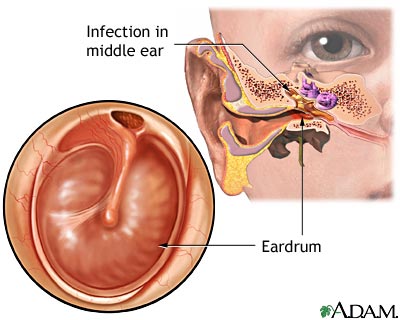
  Ear infections are practically a rite of passage into adolescence, as most children experience this ubiquitous childhood malady at least once—often several times—as they mature. Furthermore, as most parents are aware, trying to get young children to take medication orally can be trying at the best of times, let alone several times a day while they are experiencing pain in their head. Now, a team of scientists at Boston Children's Hospital in collaboration with investigators at Boston Medical Center and Massachusetts Eye and Ear has just published data from a preclinical study that could make treatment of this common childhood illness potentially safer and much easier for both the patient and the parents. 

Image result for ear infection
“Force-feeding antibiotics to a toddler by mouth is like a full-contact martial art,” quipped lead study investigator Daniel Kohane, M.D., Ph.D., director of the Laboratory for Biomaterials and Drug Delivery at Boston Children’s Hospital. Dr. Kohane and his colleagues found that a single application bioengineered gel, squirted in the ear canal, could deliver a full course of antibiotic therapy for middle-ear infections  
Middle-ear infection, or otitis media, affects 95% of children, prompting 12 to 16 million clinical visits per year in the U.S. alone. It's the number one reason for pediatric antibiotic prescriptions. Unfortunately, because children often seem to improve within a few days, parents often stop treatment too soon. Incomplete treatment and frequent recurrence of otitis media (40% of children have four or more episodes) encourages the development of drug-resistant infections. And because high doses are needed to get enough antibiotic to the ear, side effects like diarrhea, rashes, and oral thrush are common.
"With oral antibiotics, you have to treat the entire body repeatedly just to get to the middle ear," remarked lead study investigator Rong Yang, Ph.D., a chemical engineer in Dr. Kohane's laboratory. "With the gel, a pediatrician could administer the entire antibiotic course all at once, and only where it's needed."
The research team developed a new antibiotic gel that when squirted into the ear canal, quickly hardens and stays in place, gradually dispensing antibiotics across the eardrum into the middle ear. "Our technology gets things across the eardrum that don't usually get across—in sufficient quantity to be therapeutic," noted Dr. Kohane.
The findings from this study were published recently in Science Translational Medicine in an article entitled “Treatment of Otitis Media by Transtympanic Delivery of Antibiotics.”

The eardrum clinically referred to as the tympanic membrane, has long been viewed as an impenetrable barrier. The newly bioengineered gel gets drugs past it with the help of chemical permeation enhancers (CPEs), compounds FDA-approved for other uses that are structurally similar to the lipids in the stratum corneum, the eardrum's outermost layer. The CPEs insert themselves into the membrane, opening up molecular pores that allow the antibiotics to seep through.

  Amazingly, the researchers did not observe any toxicity from their method and the antibiotic was undetectable in the animals' blood. While the investigators initially noted a slight hearing loss in some animals—similar to that caused by earwax— they found that giving less of the gel alleviated the problem.
"Transtympanic delivery of antibiotics to the middle ear has the potential to enable children to benefit from the rapid antibacterial activity of antimicrobial agents without systemic exposure and could reduce the emergence of resistant microbes," concluded study co-author Stephen Pelton, M.D., a pediatric infectious disease physician at Boston Medical Center.

Wednesday, 7 September 2016


APPLY NOW

Tuesday, 6 September 2016


http://www.careerbiotech.com/2016/09/walk-in-interview-at-indian-institute.html


Monday, 5 September 2016

www.CareerBiotech.com. Powered by Blogger.